The Truth About GLP-1 Medications: What You Need to Know Before You Start
By Andrea Scott
GLP-1 medications can drive significant weight loss. Learn how they work, what research shows, and how to improve long-term success.
Home > Health Hub Blog > The Truth About GLP-1 Medications: What You Need to Know Before You Start
GLP-1 medications like Ozempic, Wegovy, Mounjaro, and Zepbound have transformed how we approach weight management and diabetes treatment. Clinical studies show that these medications can help patients achieve a 15% or greater reduction in body weight, numbers that seemed impossible just a few years ago.
But here’s what most people don’t realize: success isn’t measured by the number on the scale when you’re taking the medication. Real success is about what happens after you stop.
At Dispensaries Ltd, we’ve counselled hundreds of patients through their GLP-1 journey, and we’ve learned something crucial: the people who succeed long-term aren’t the ones who lose the most weight the fastest. They’re the ones who understand what they’re getting into from day one and use their time on medication wisely.
How These Medications Actually Work in Your Body
Let’s start with the basics. GLP-1 stands for glucagon-like peptide-1 receptor agonist—a mouthful that essentially means these medications mimic a natural hormone your body already produces. Medications like semaglutide (sold as Ozempic and Wegovy) work by helping regulate your blood sugar, slowing digestion, and, most importantly, signalling to your brain that you’re full.
The newer medications like tirzepatide (Zepbound or Mounjaro) are even more sophisticated. They work on two different hormones simultaneously: GLP-1 helps you eat less, while GIP (glucose-dependent insulinotropic polypeptide) helps your body use energy more efficiently. It’s like having two supportive coaches instead of one.
But to truly understand why these medications work—and why maintaining weight loss is so challenging—we need to talk about what’s happening in your brain.
The Ancient Battle: Ghrelin vs. Leptin
Your body has been conducting an intricate hormonal dance for millions of years, long before processed foods and sedentary lifestyles complicated the equation. Two hormones are central to this ancient system: ghrelin and leptin.
Ghrelin is your hunger hormone, produced in your stomach. Think of it as the persistent friend who keeps texting you about getting dinner. It increases before meals, stimulates your appetite, and encourages your body to store fat. Interestingly, people with obesity actually have lower baseline ghrelin levels than lean individuals. But here’s the cruel twist: when you lose weight, your body panics and produces more ghrelin, desperately trying to regain what it perceives as dangerously lost fat stores.
Leptin works in the opposite direction. Produced by your fat cells, it’s supposed to tell your brain, “We’re full, we have enough energy stored, you can stop eating now.” The more fat you have, the more leptin you produce. Sounds like a perfect system, right?
Except it’s not. Many people with obesity develop something called leptin resistance. Despite high leptin levels in their bloodstream, their brains stop responding to it. It’s as if someone is screaming “I’m full!” in a soundproof room—the message simply doesn’t get through. Your brain can’t hear the satiety signal anymore.
This is where GLP-1 medications become game-changers. They amplify the satiety signals that leptin resistance has muted. They override ghrelin’s constant hunger demands. They give your brain a chance to reset its relationship with food and finally hear those “I’m full” messages again.
But—and this is critical—GLP-1 medications don’t permanently fix leptin resistance or reset your ghrelin response. They’re a powerful tool, not a cure. This is why what you do while taking them matters so much.
The Hard Truth About Stopping
A recent 2025 study presents key statistics every patient should know before starting GLP-1 therapy. Nearly half of all patients—46.5%—discontinue these medications within the first year. After stopping, patients regain an average of 0.4 kilograms per month. Most people return to their baseline weight within 1.7 years of discontinuation, and those cardiovascular and metabolic improvements you worked so hard for? They reverse too.
For semaglutide and tirzepatide specifically, studies show patients regain between 2.2 to 9.69 kilograms in the first year after stopping, with the amount roughly proportional to how much they originally lost.
Why does weight return so quickly? Because your body doesn’t forget its original weight. When you stop taking GLP-1 medications, the hunger-curbing effects disappear almost immediately. Ghrelin levels surge back. Leptin resistance returns with a vengeance. Your food environment—surrounded by ultra-processed foods designed to override your natural satiety signals—remains exactly the same. Your body has adapted metabolically to be more efficient at storing calories, and it actively fights to regain what it considers necessary weight for survival.
This isn’t a failure of willpower. It’s biology doing exactly what it evolved to do over millions of years.
The Training Wheels Analogy
When I counsel patients starting GLP-1 medications, I use an analogy that changes how they think about their journey. Remember learning to ride a bike with training wheels? You knew those training wheels would come off eventually—whether that was in six months, a year, or three years. The training wheels gave you stability while you learned balance, steering, and confidence.
GLP-1 medication is your training wheels for healthy eating. It provides stability as you develop the skills you’ll need for lifelong success. The medication creates a window of opportunity—a precious period when hunger doesn’t overwhelm your good intentions, when you can actually hear your body’s fullness signals, and when you can build new habits without fighting your biology every single moment.
Now is the time to build the habits that ensure your success when those training wheels come off. Because they will come off, whether by choice, necessity, or circumstance.
In Part 2, we’ll explore exactly how to use this window of opportunity: which foods to prioritize, how to prevent the alarming muscle loss that often accompanies rapid weight loss, and the specific habits you need to build during each phase of your GLP-1 journey to ensure the weight stays off for good.
At Dispensaries Ltd, we are here to help.
Contact us to book time with our in-house dietitian!
GLP-1 Medications: Benefits, Risks & What Happens When You Stop | Dispensaries
From hormone balance, over gut health, to overall wellness. Stay informed with tips from our pharmacists at Dispensaries Ltd.
Get To Know Us Better
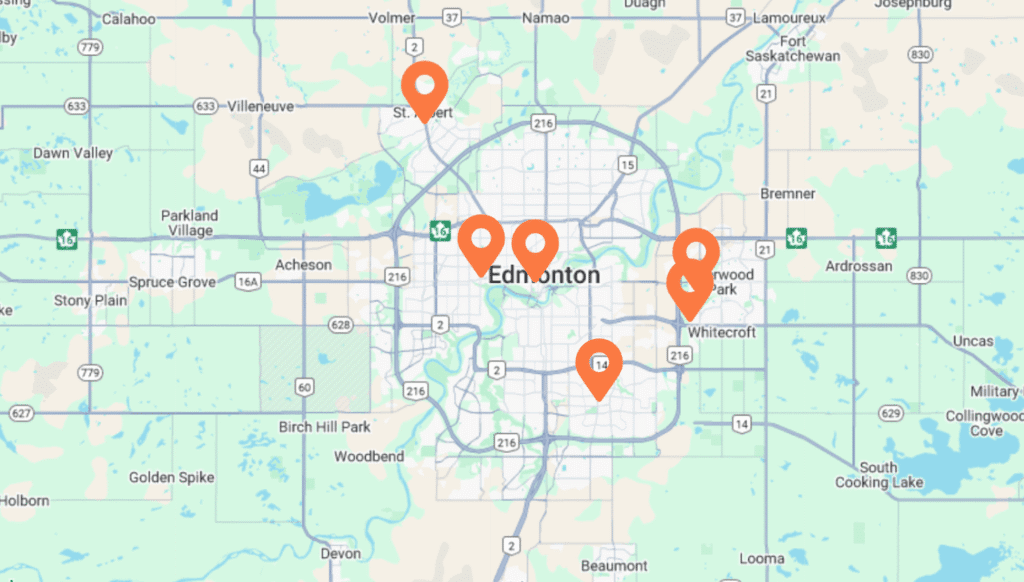
Find a Dispensaries Ltd Location Near You
We’re proud to serve communities across the region and throughout Alberta with care and convenience.
Each of our stores is staffed by knowledgeable, compassionate professionals ready to help you with everything from compounding pharmacy services to supplement guidance and beyond.