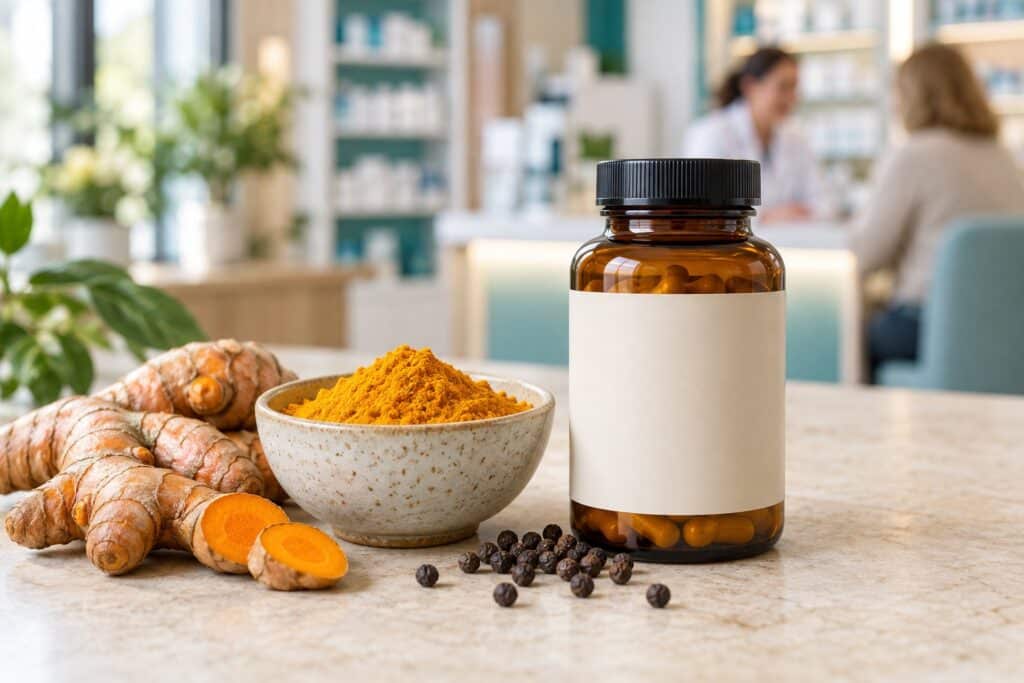
What curcumin may do for chronic inflammation, why formulation matters and when an NSAID may still be the better option.
QUICK ANSWER
For acute pain such as a sprained ankle, headache or post-dental soreness, the supplied pharmacist draft says NSAIDs work faster and more reliably. For ongoing inflammation such as osteoarthritis or chronic joint stiffness, properly formulated curcumin may be a reasonable longer-term option for some people.
There is a bottle of turmeric supplements on the shelf at most pharmacies and health-food stores, a turmeric latte on every café menu and usually a friend who swears by it for joint pain. So: is it actually legitimate?
The supplied pharmacist draft separates the hype from the evidence and compares curcumin with the over-the-counter pain relievers many people already know.
How NSAIDs and curcumin work differently
When you have pain or inflammation, your body produces chemicals called prostaglandins. These are made through enzymes including COX-1 and COX-2.
Ibuprofen and naproxen block these enzymes, which is why they can reduce pain, swelling and fever relatively quickly — often within 30–60 minutes.
Curcumin, the active compound in turmeric, works differently. Rather than blocking COX enzymes directly, the supplied draft describes it as affecting several inflammatory signalling pathways, including NF-κB, TNF-α, IL-6 and COX-2.
Acute pain vs. chronic inflammation
For acute pain, NSAIDs usually win on speed
For a headache, sprained ankle, post-dental soreness or menstrual cramps, the supplied draft says NSAIDs are generally the faster and more predictable option. Curcumin is not positioned as a rescue medication.
For chronic inflammation, curcumin may be worth discussing
For ongoing conditions such as osteoarthritis, persistent joint stiffness and general wear-and-tear pain, the supplied draft presents curcumin as a legitimate longer-term option, particularly for people with sensitive stomachs, those already on several medications, or those trying to reduce daily NSAID use.
The two approaches are not necessarily mutually exclusive. Some people may use an NSAID for a flare while using a daily curcumin product as background support, depending on their overall health and medication profile.
Why many turmeric products do not work well
Plain curcumin is poorly absorbed. The supplied draft notes that unformulated curcumin has very low bioavailability, which is why product formulation matters.
The draft recommends looking for enhanced-absorption formats such as:
- Curcumin + piperine (black pepper extract).
- Meriva.
- BCM-95 / Curcugreen.
- Theracurmin, NovaSOL or Longvida.
It also emphasizes pharmaceutical-grade quality, third-party testing, verified potency and avoidance of contaminants.
Supplied dosing guidance: 500–2,000 mg of curcumin daily, split into two doses, taken with a fatty meal to support absorption.
Who should talk to a pharmacist before taking curcumin?
- People who are pregnant or breastfeeding.
- People taking blood thinners such as warfarin, apixaban, aspirin or clopidogrel.
- People taking diabetes medications.
- People taking blood-pressure medications.
- People undergoing chemotherapy.
- People with a history of gallstones or kidney stones.
The honest bottom line
Turmeric is not a miracle cure. But the supplied draft also does not treat it as snake oil. For chronic inflammation, it describes a meaningful evidence base and stresses that the product quality and formulation are crucial.
A pharmaceutical-grade, appropriately formulated curcumin supplement taken consistently is not the same thing as adding turmeric spice to a latte or meal.
Dispensaries Ltd. Pharmacy has been serving Edmonton and surrounding communities since 1934. With six locations across Edmonton, Sherwood Park and St. Albert, the supplied draft positions the pharmacy as a local resource for informed, pharmacist-guided supplement decisions.
Not sure whether curcumin fits your medication list?
Bring your current medications and supplements to a Dispensaries Ltd. pharmacist. We can help you check for interactions and determine whether curcumin is worth considering.
Frequently asked questions
Is turmeric the same as curcumin?
Curcumin is one of the active compounds found in turmeric. Supplement effectiveness depends heavily on formulation and absorption.
Is curcumin fast acting?
The supplied draft describes curcumin as slower acting than NSAIDs and says it may take one to two weeks of consistent use before a noticeable difference.
Can curcumin replace ibuprofen?
Not in every situation. The supplied draft says NSAIDs are generally more appropriate for acute pain, while curcumin may be an option for chronic inflammation.
Who should be cautious with curcumin?
People taking blood thinners, diabetes or blood-pressure medication, people undergoing chemotherapy, those who are pregnant or breastfeeding, and people with gallstone or kidney-stone history should speak with a pharmacist first.